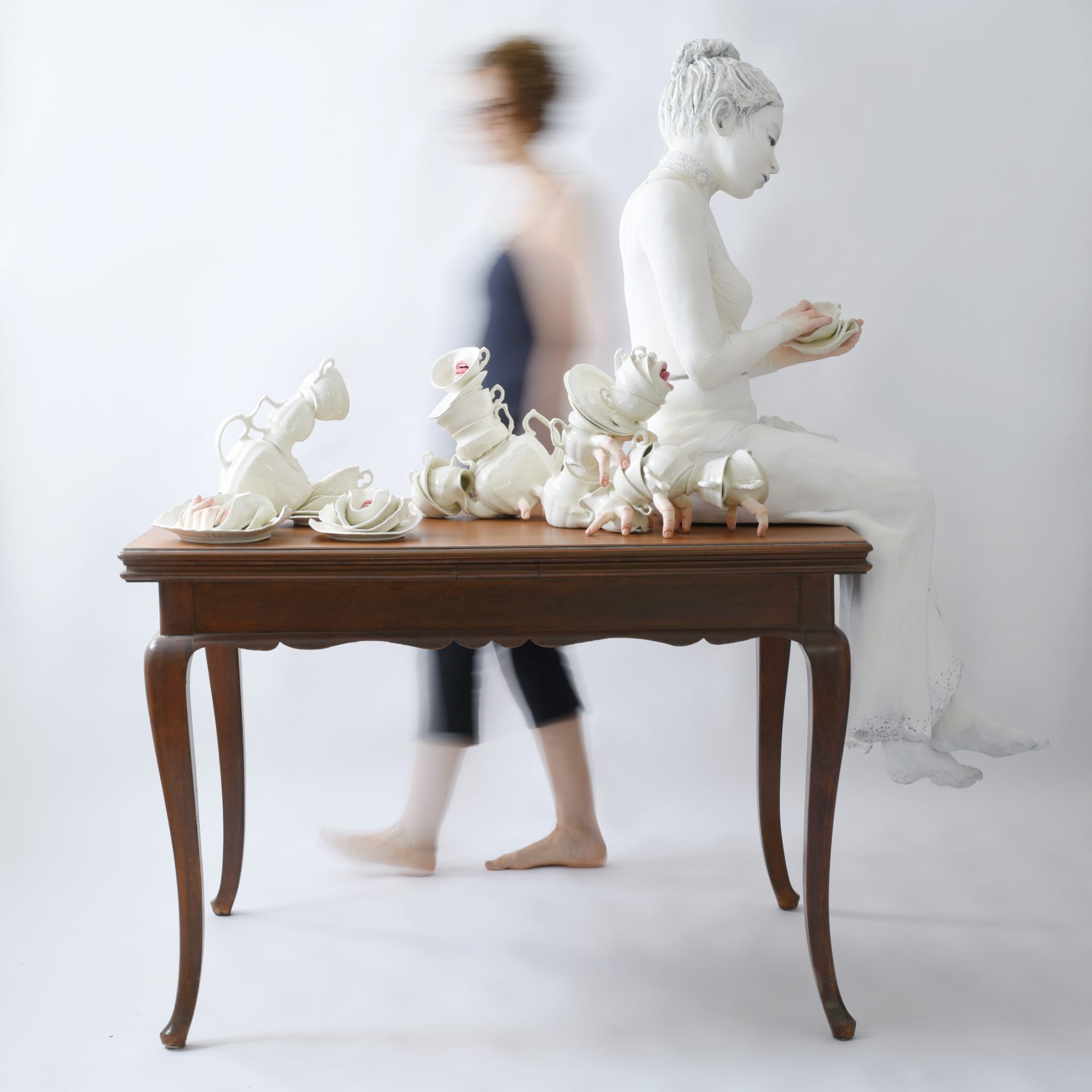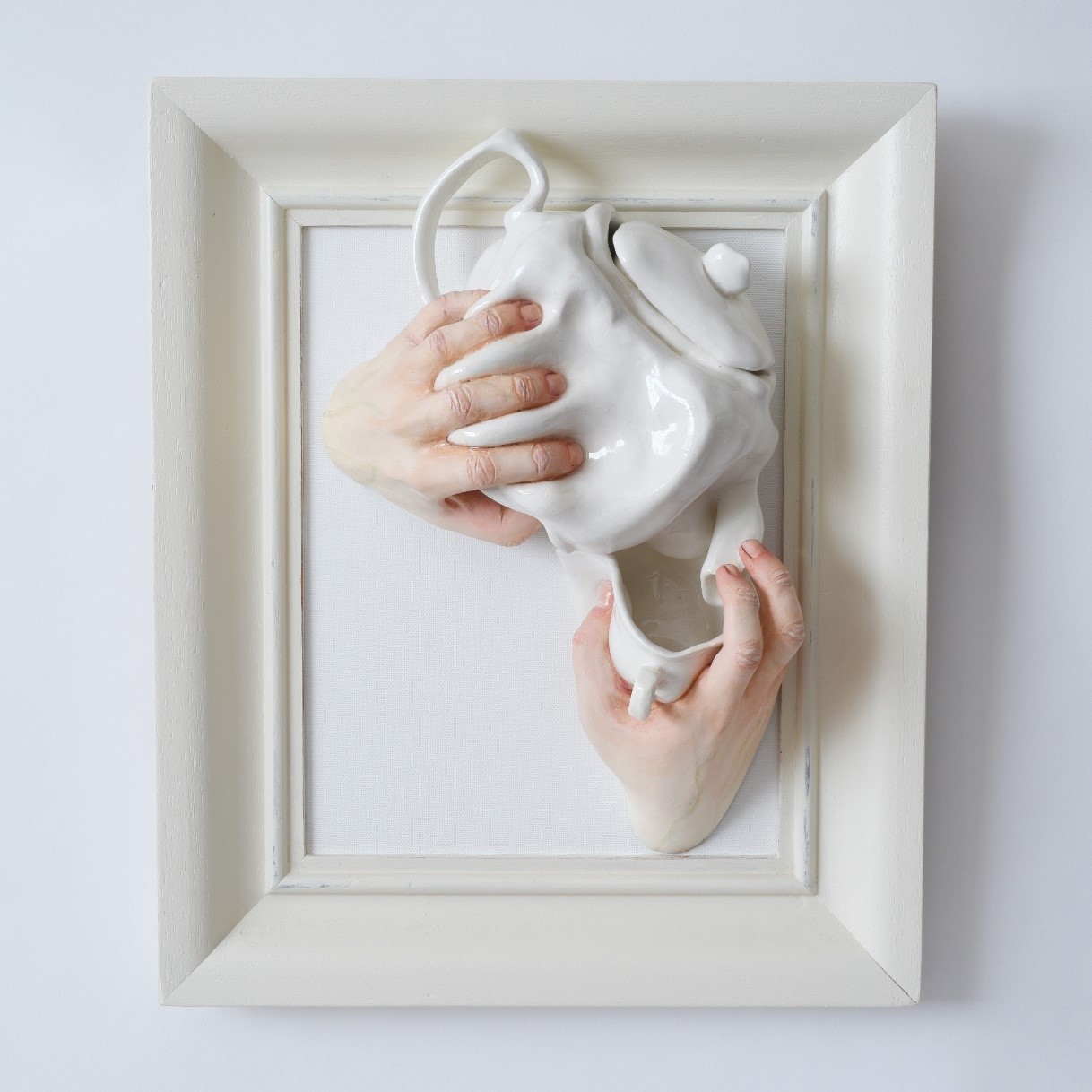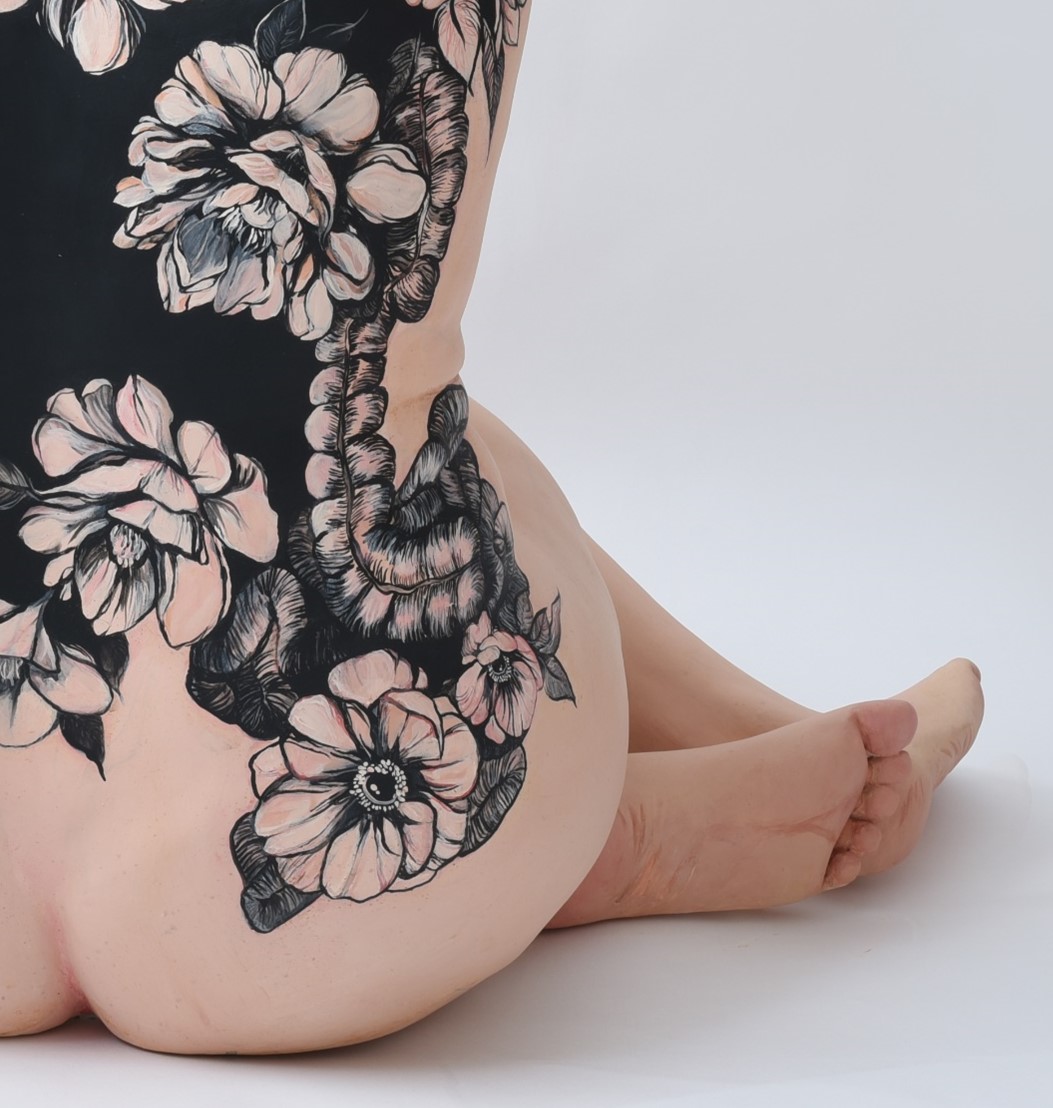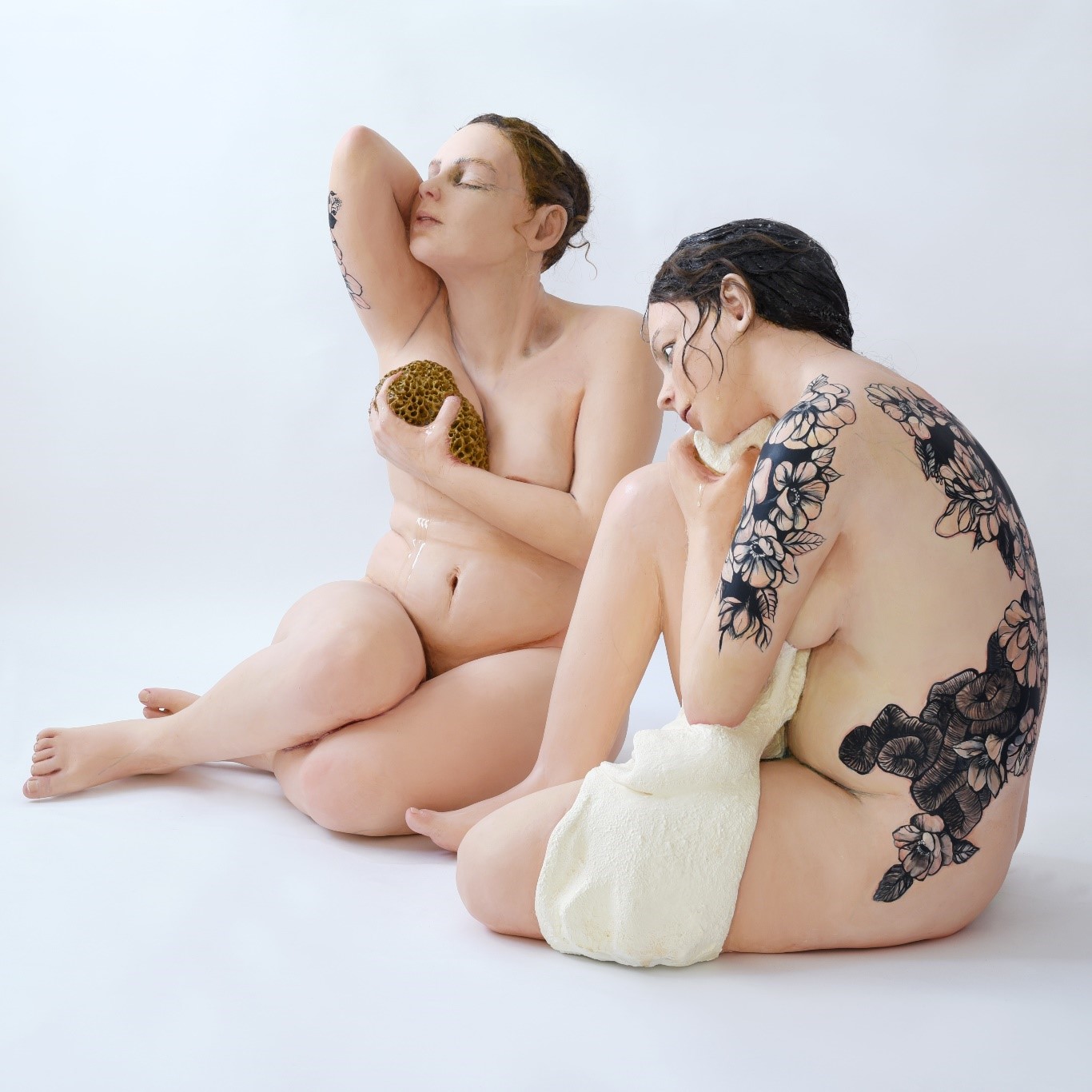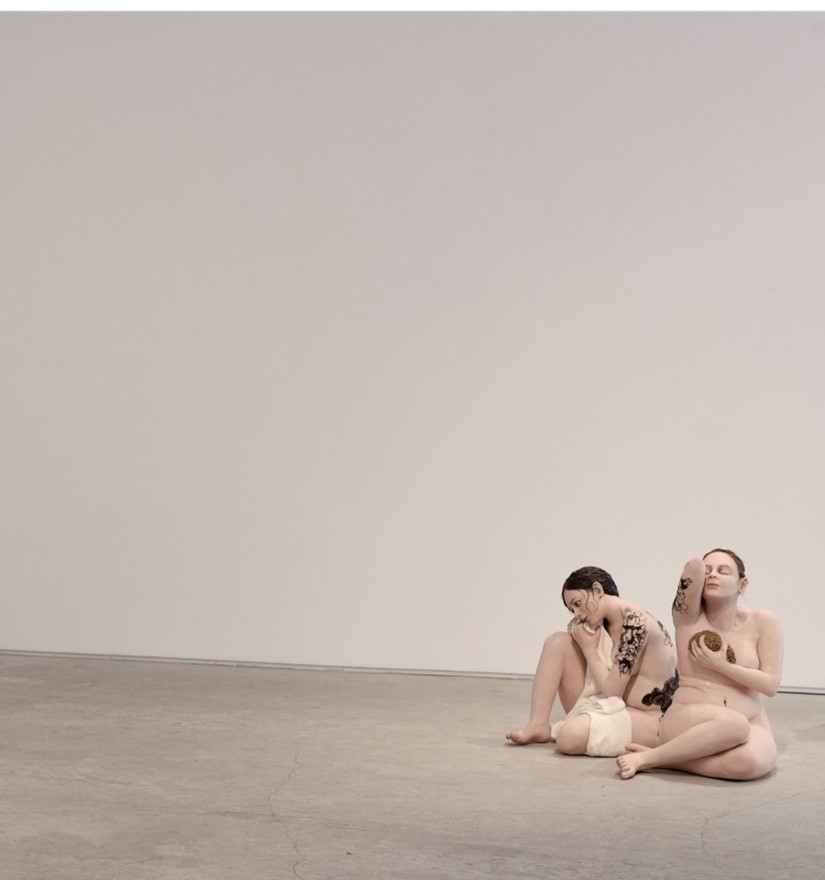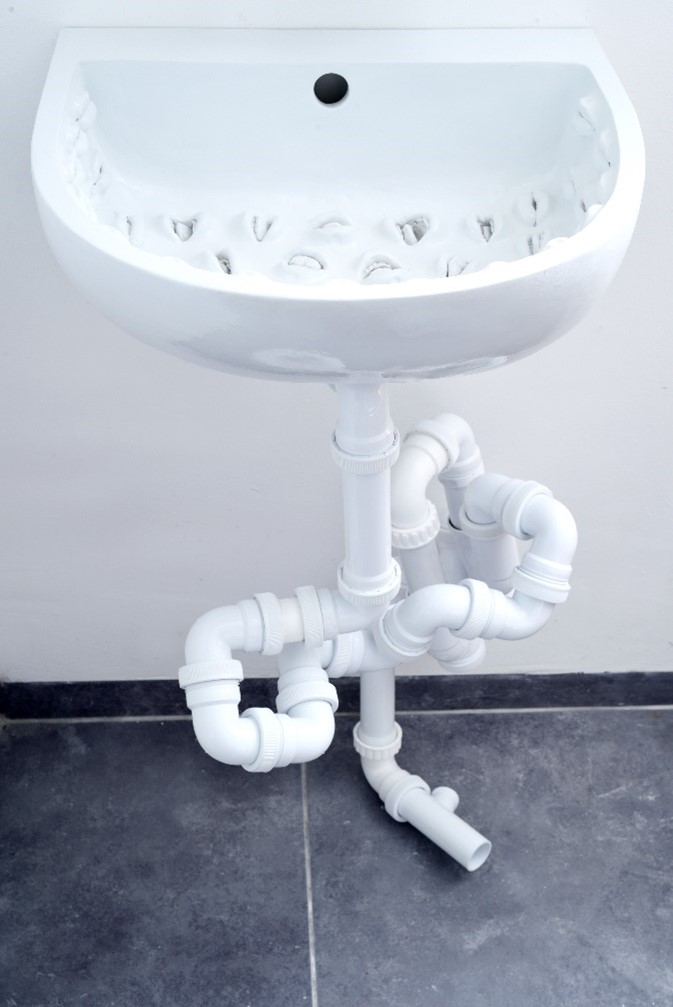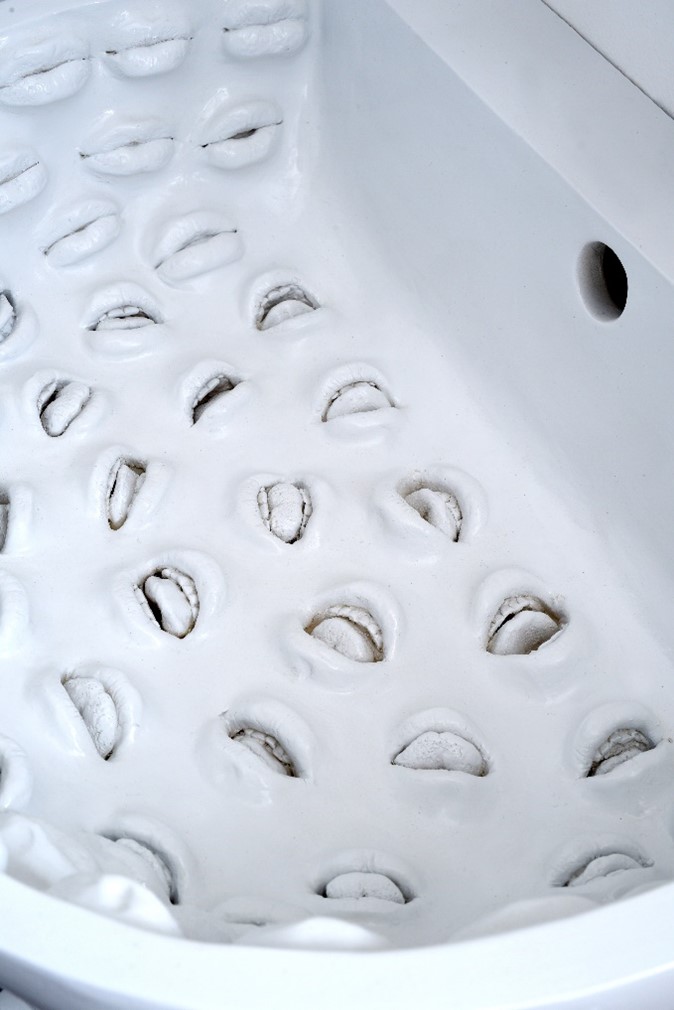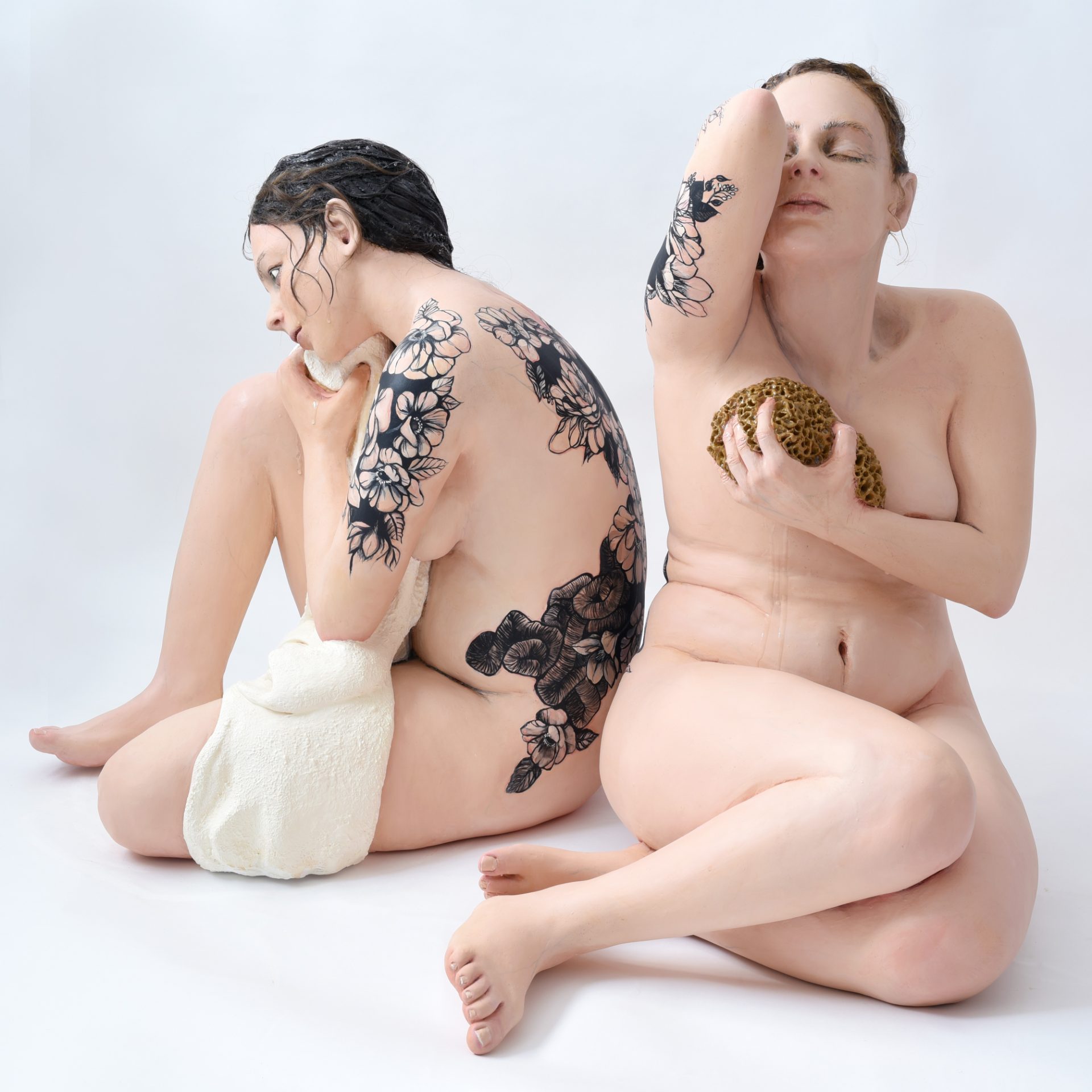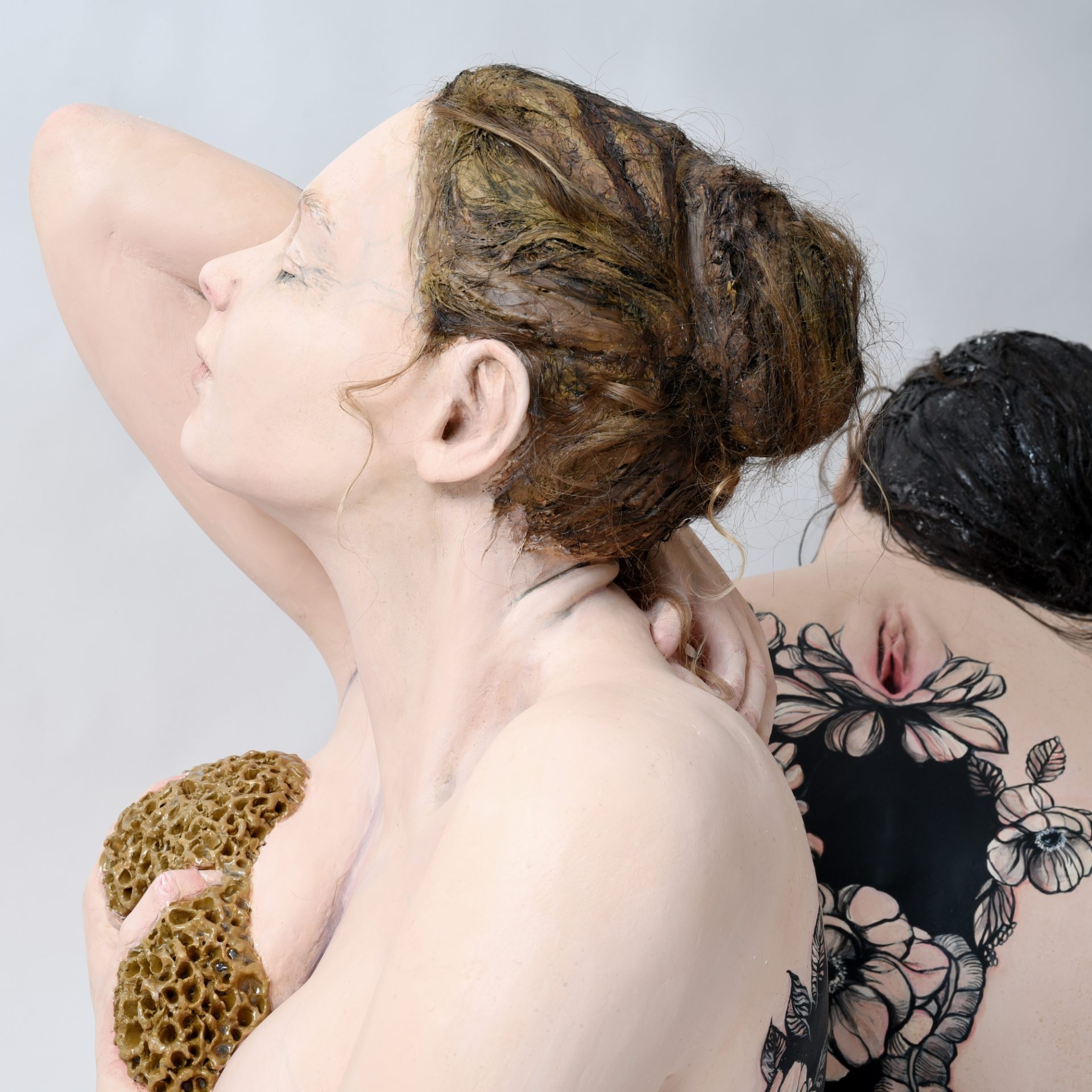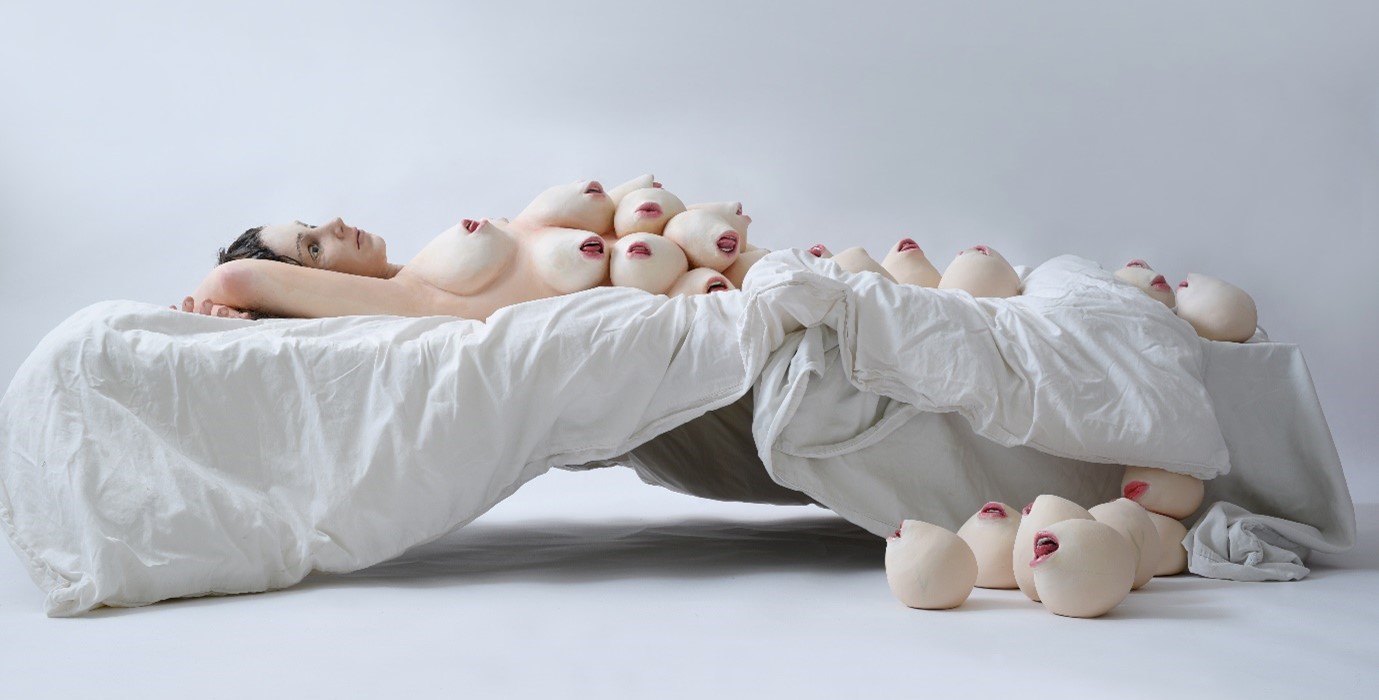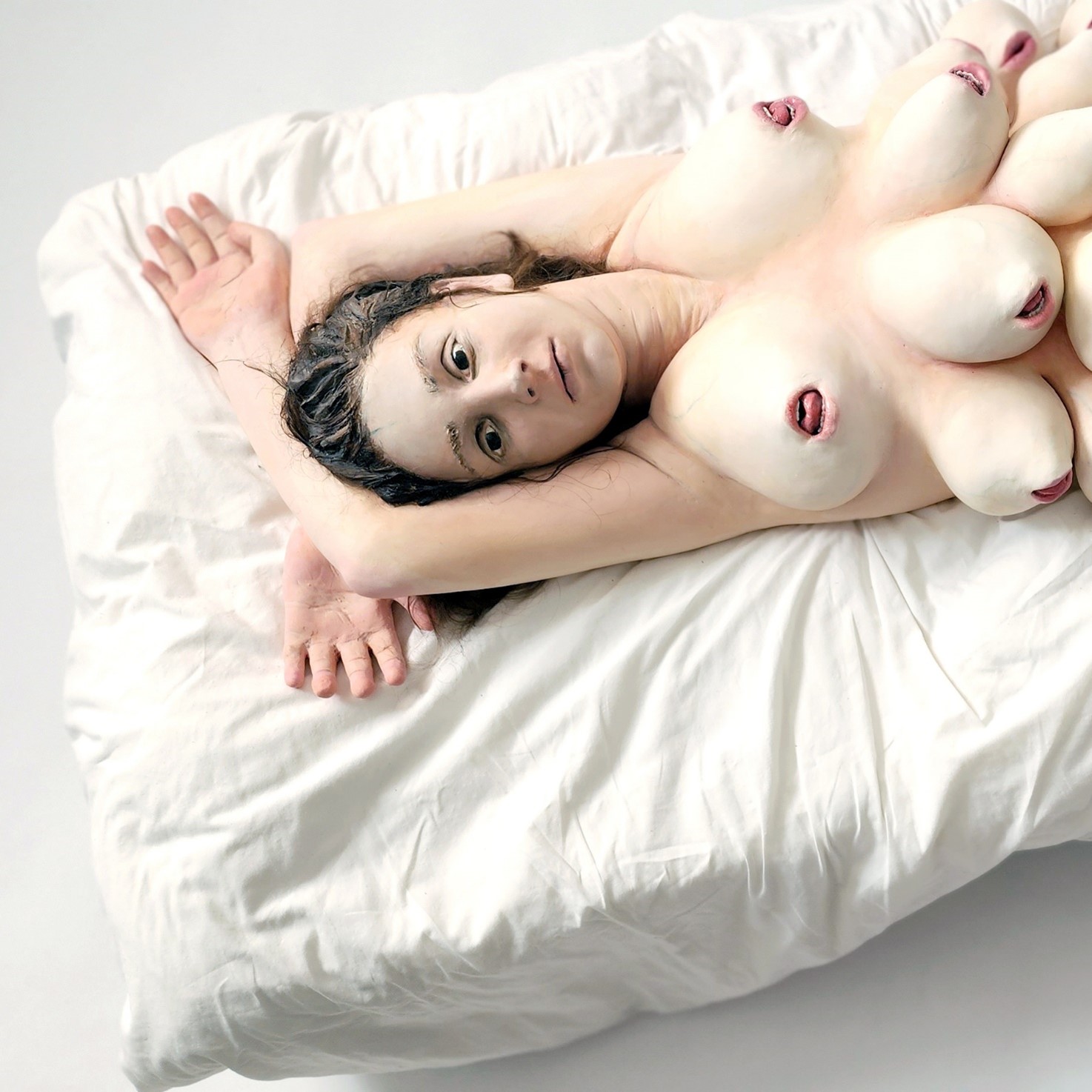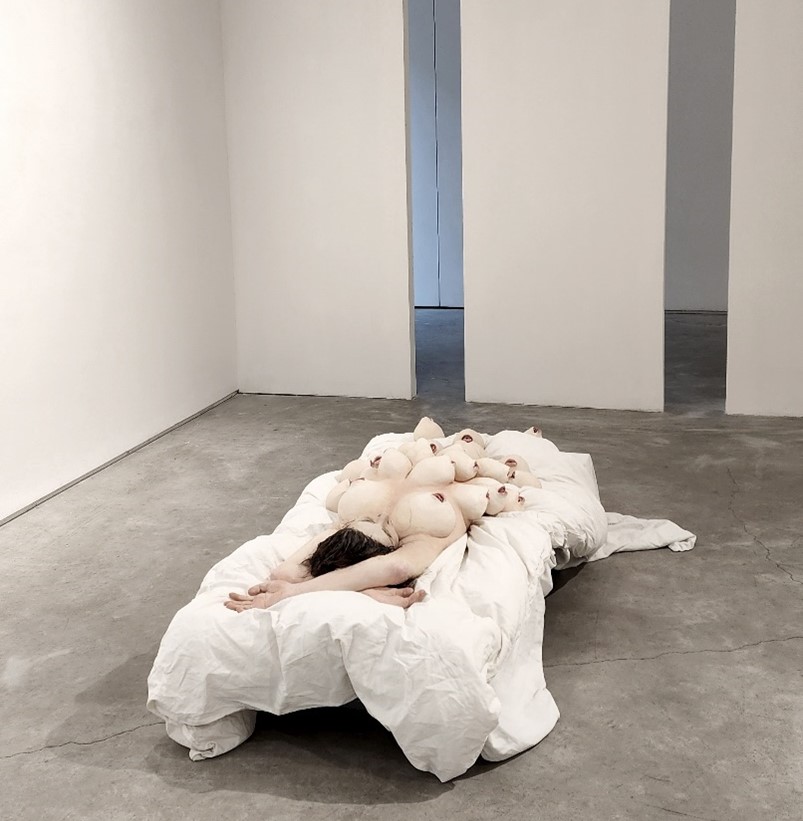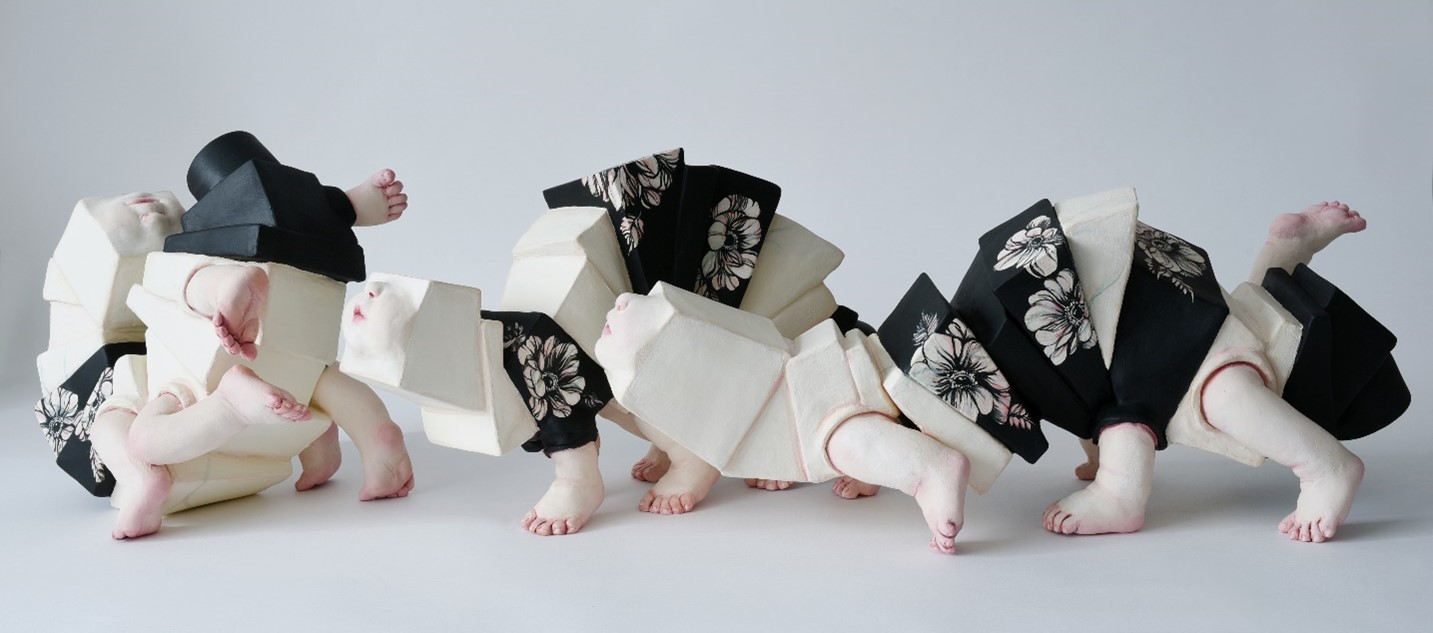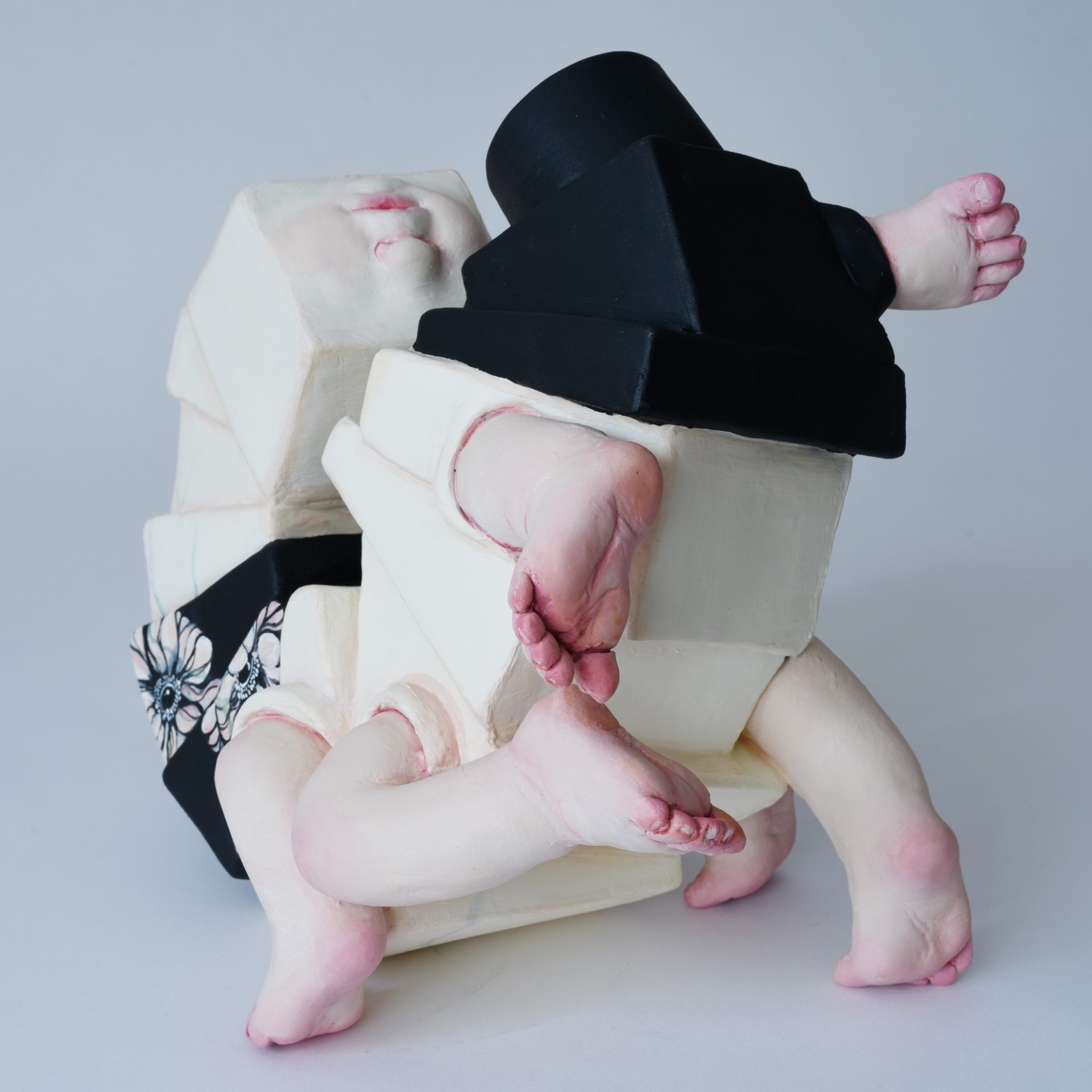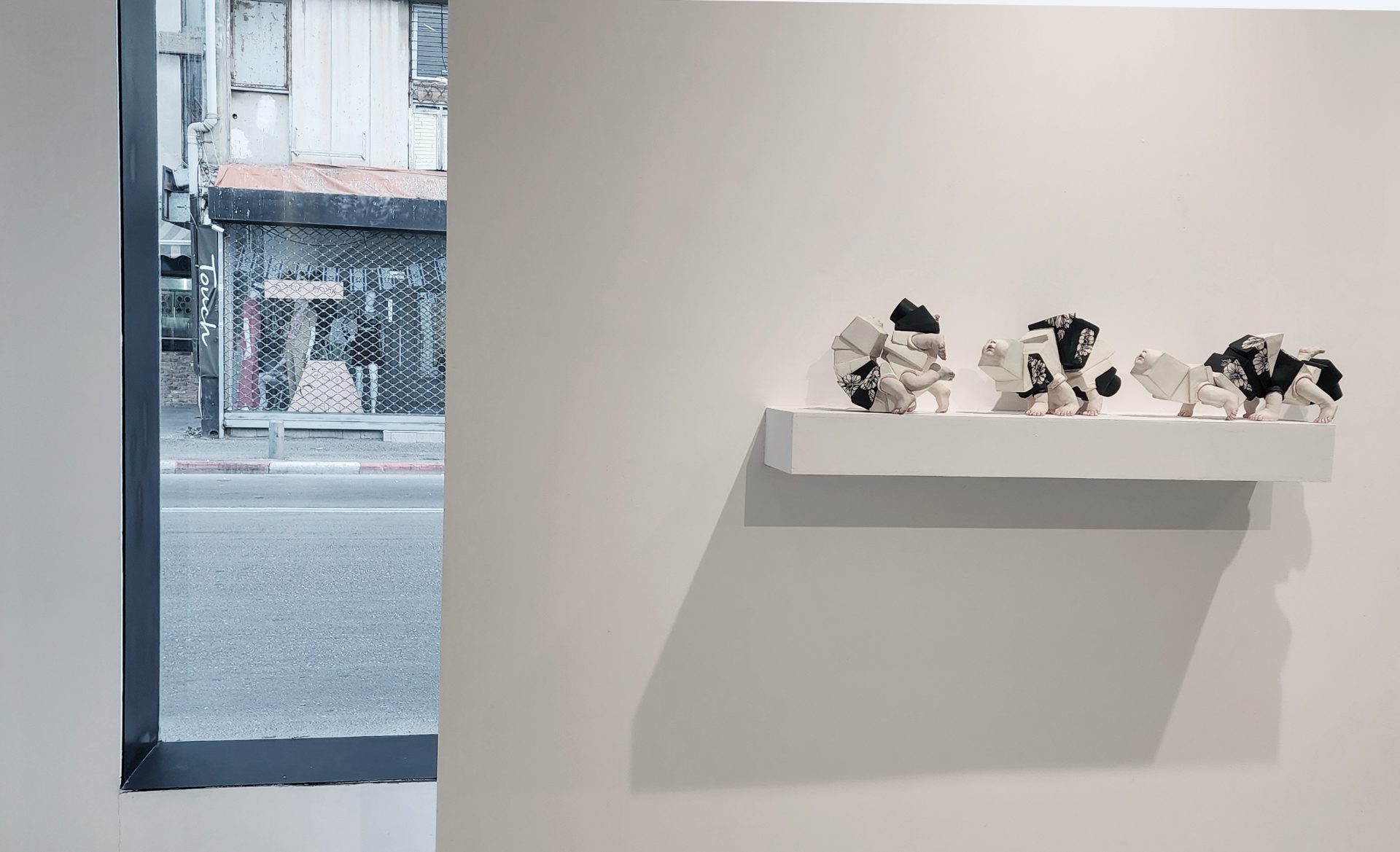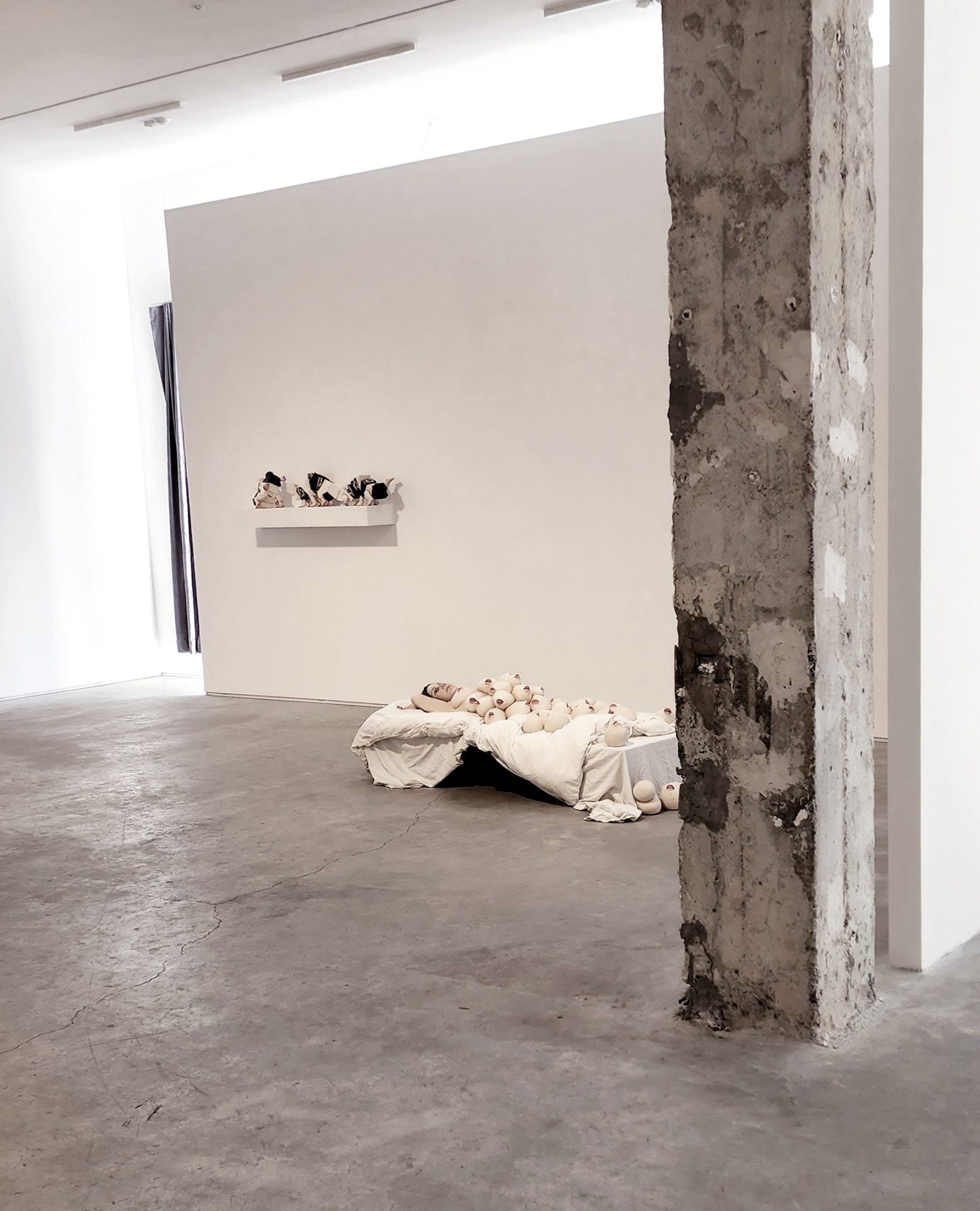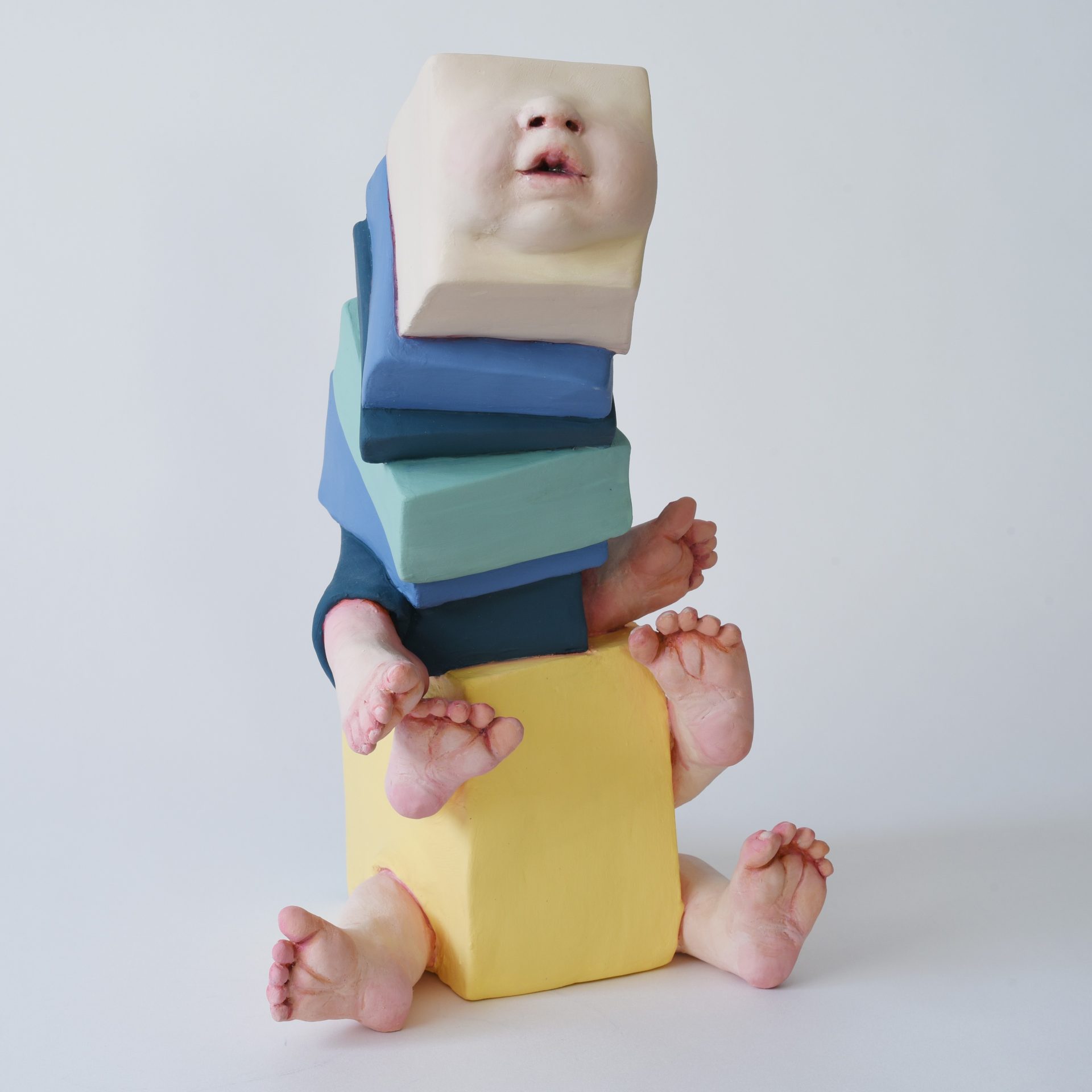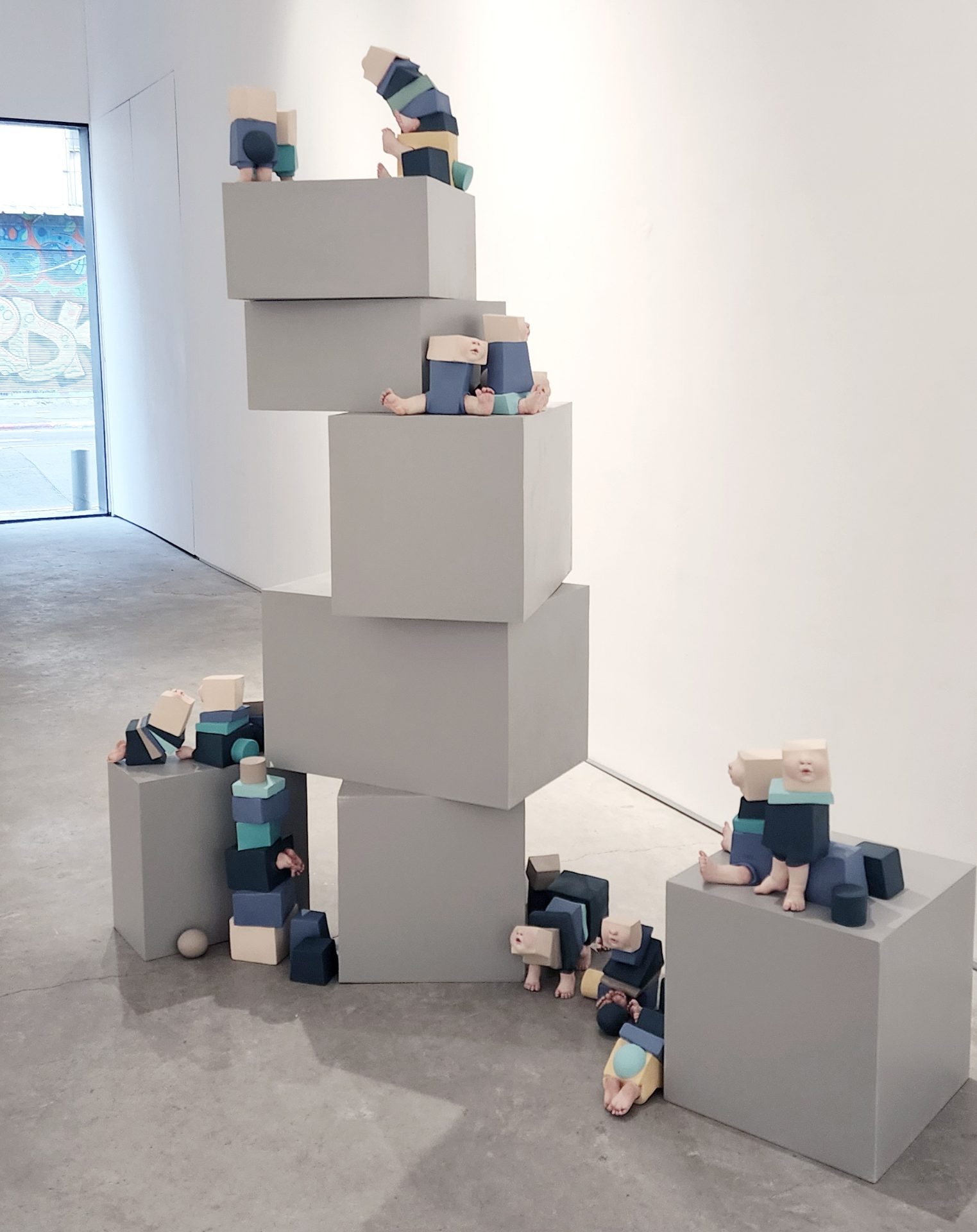
Curated by Adi Gura. The gallery became a homey environment, with installations that create three spaces in a home — an eating room, a washing room and a sleeping room. These are three rooms where a person exists intimately with the body (eats, washes and sleeps), between the four walls of home.
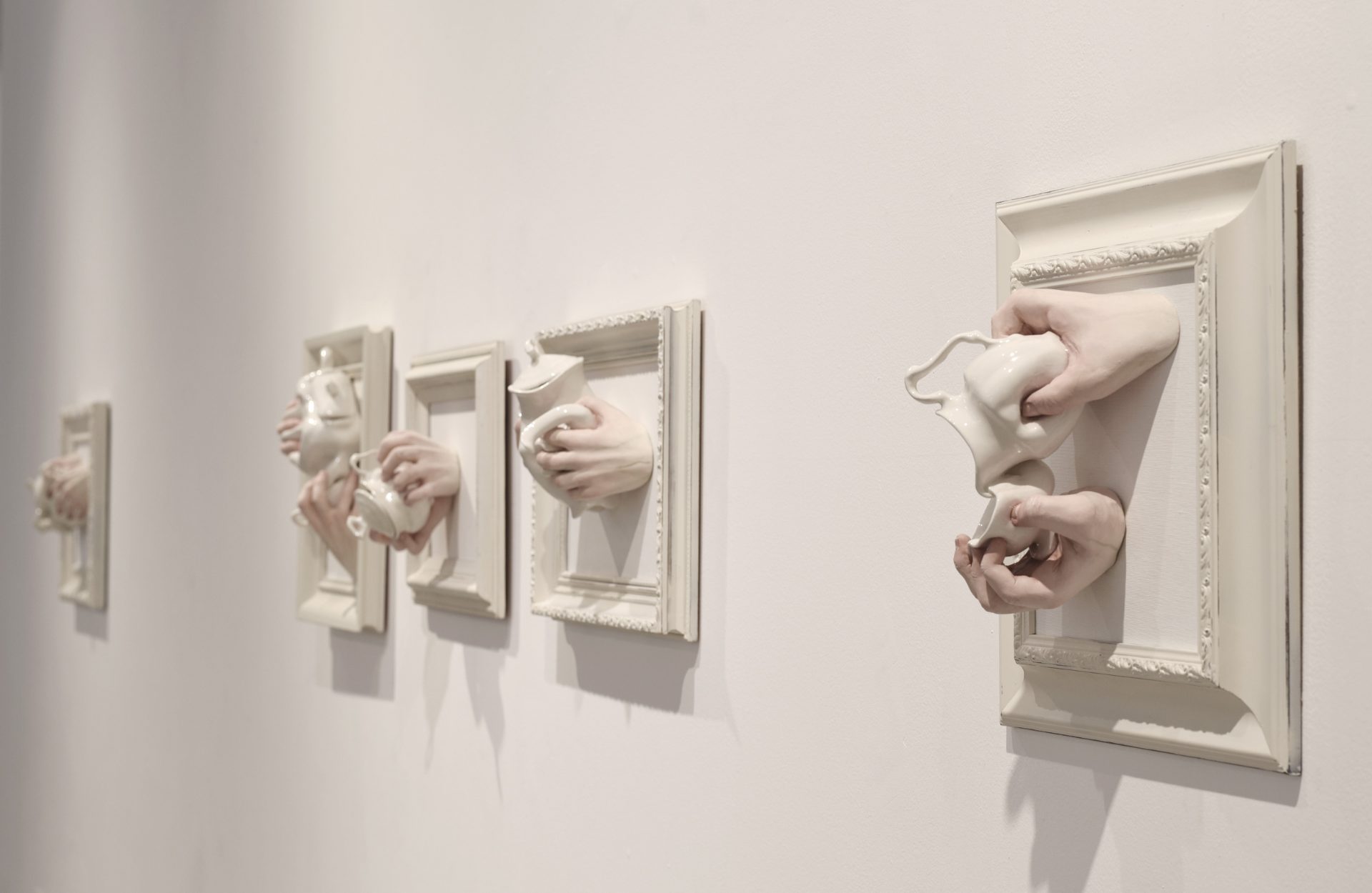
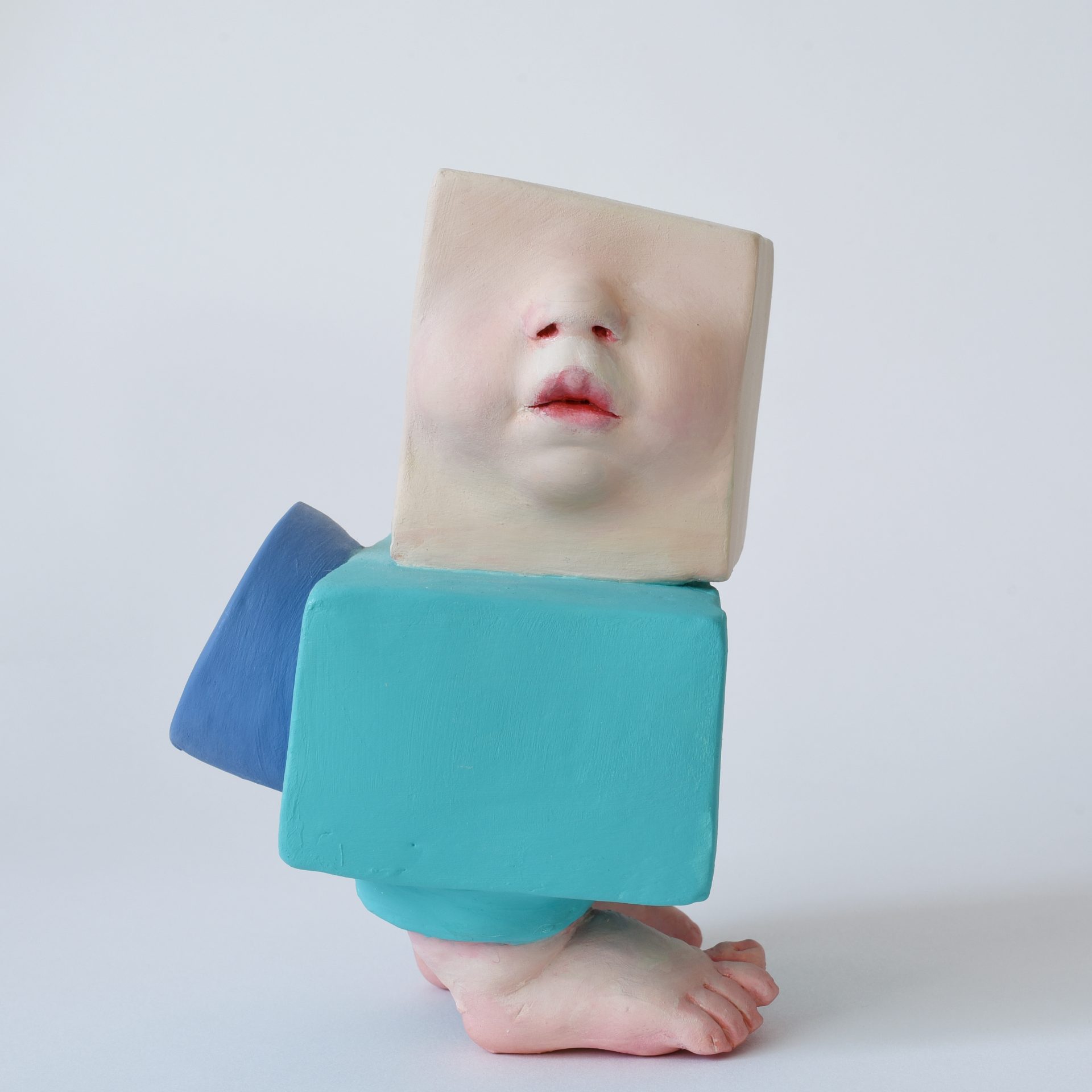
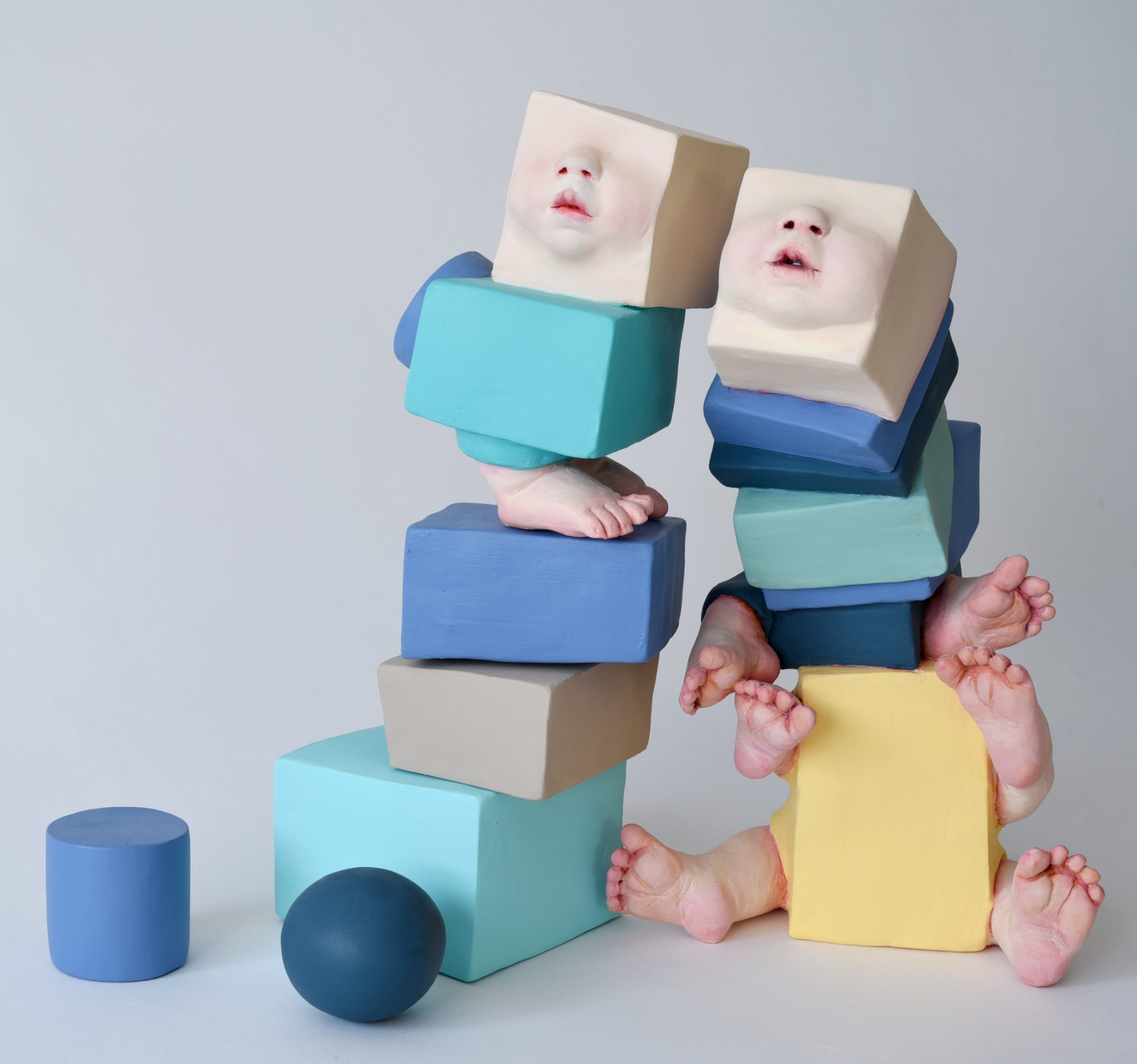
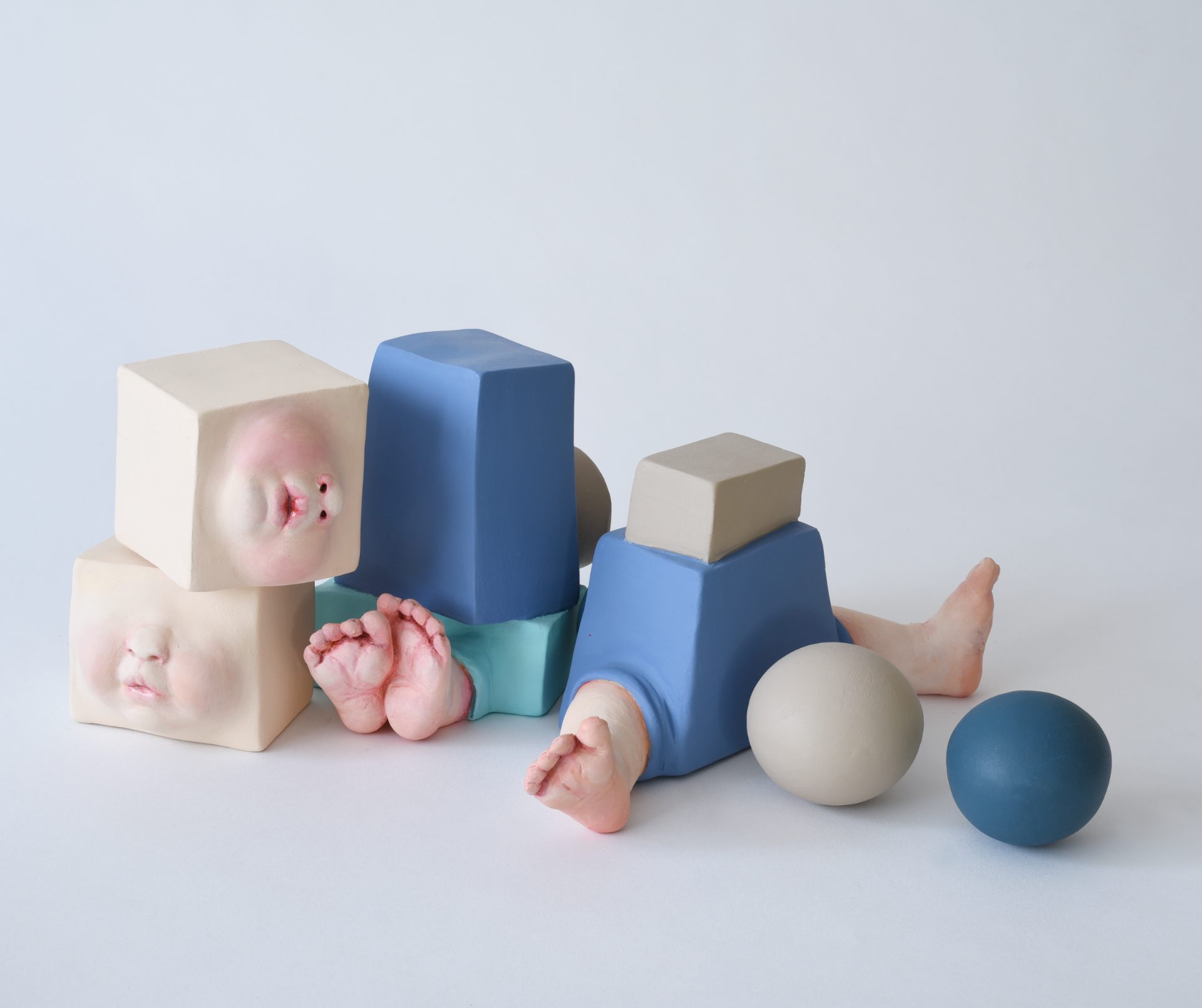
In each work, in this homey atmosphere, appears an uncanny element (a concept claimed by Freud in 1919, indicating the paradoxical combination of the familiar with the foreign) which challenges familiar reality; it cannot survive there, and it produces an emotional reaction.
The exhibition in its complexity constitutes one single work. Psychological metaphors pass as a leitmotif from one work to the other.
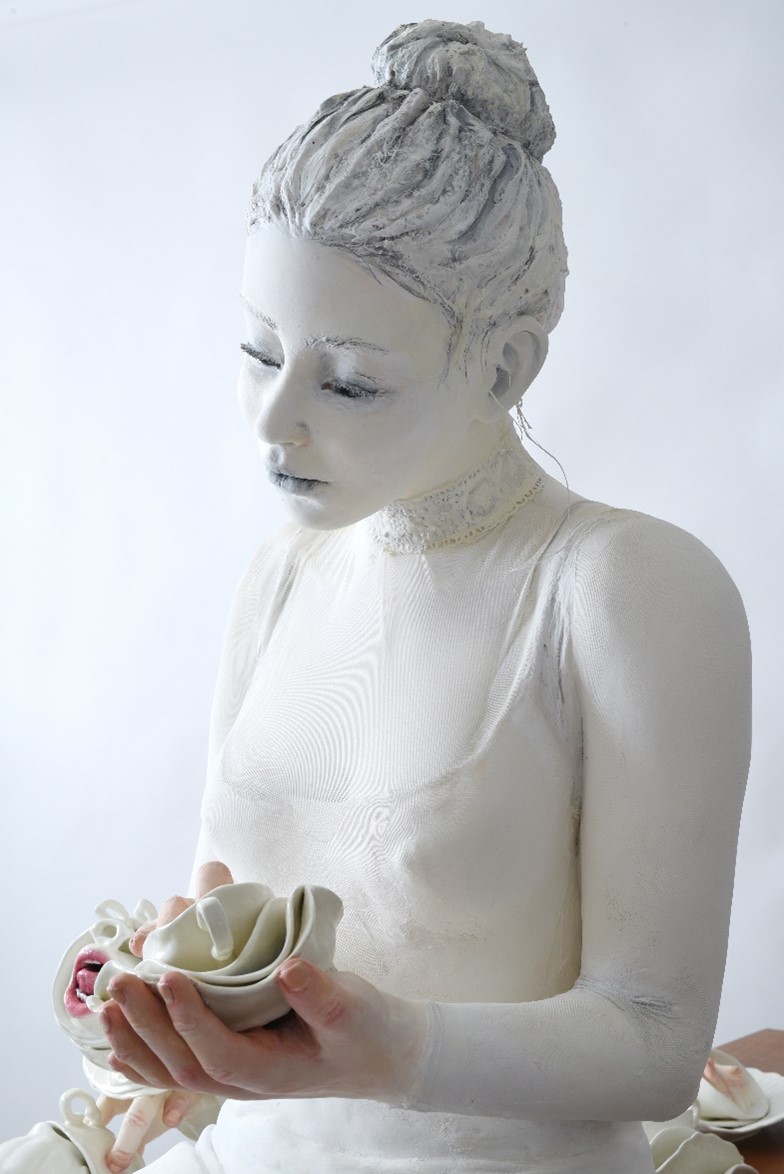
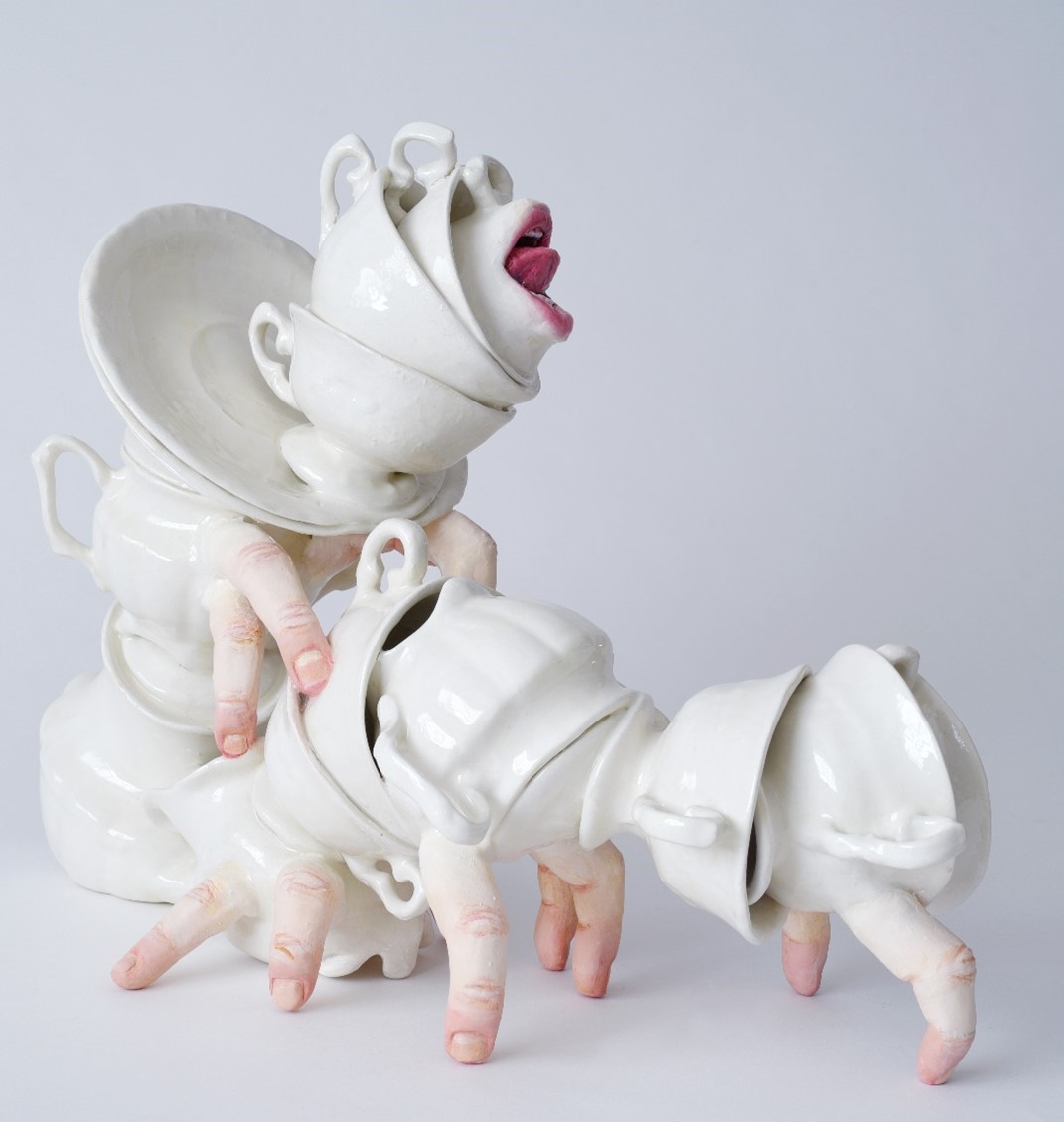
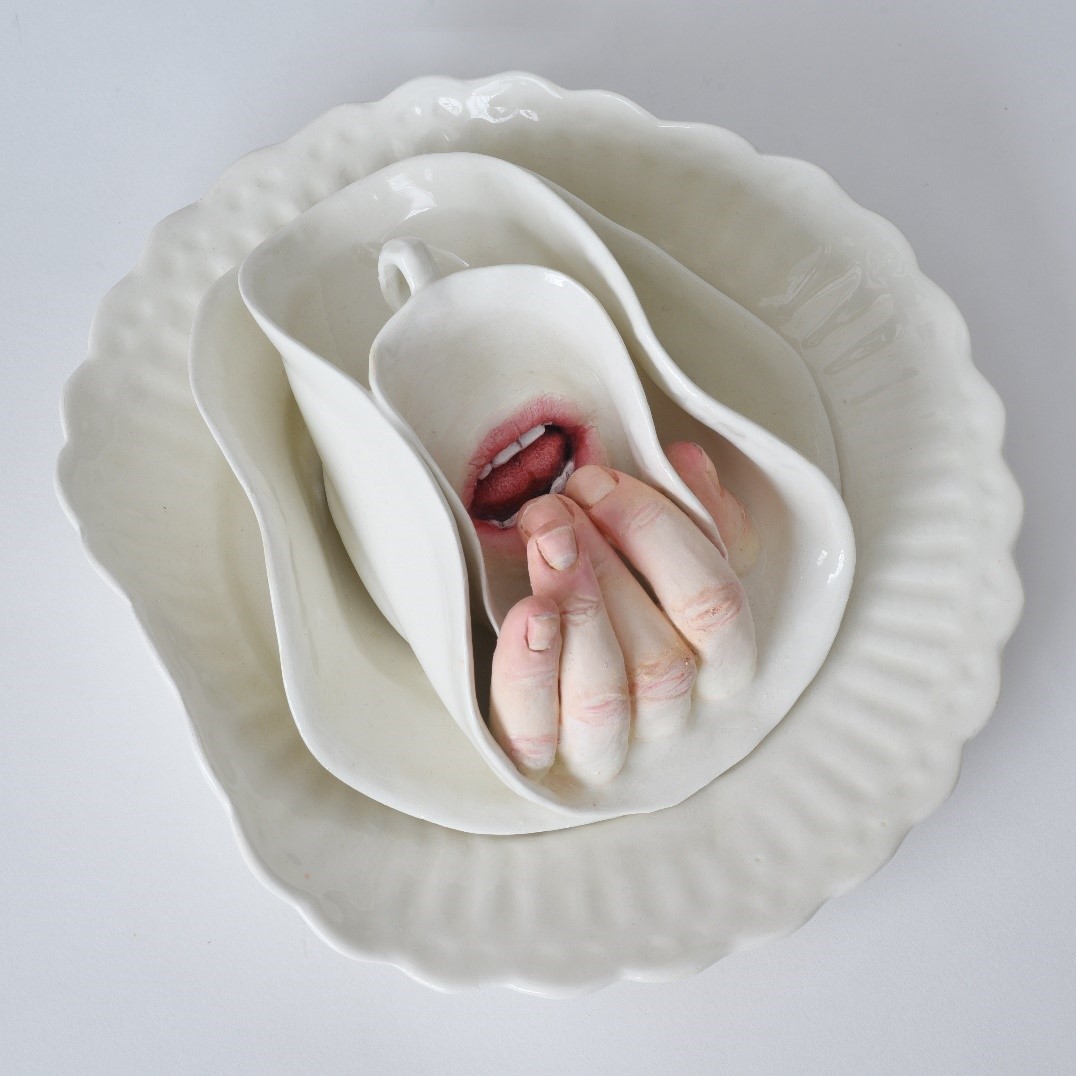
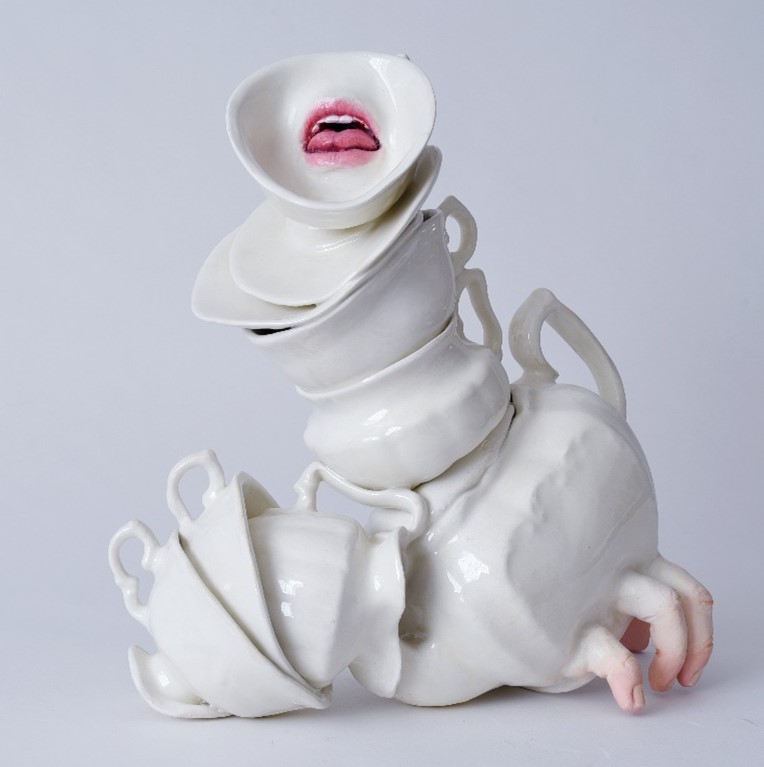
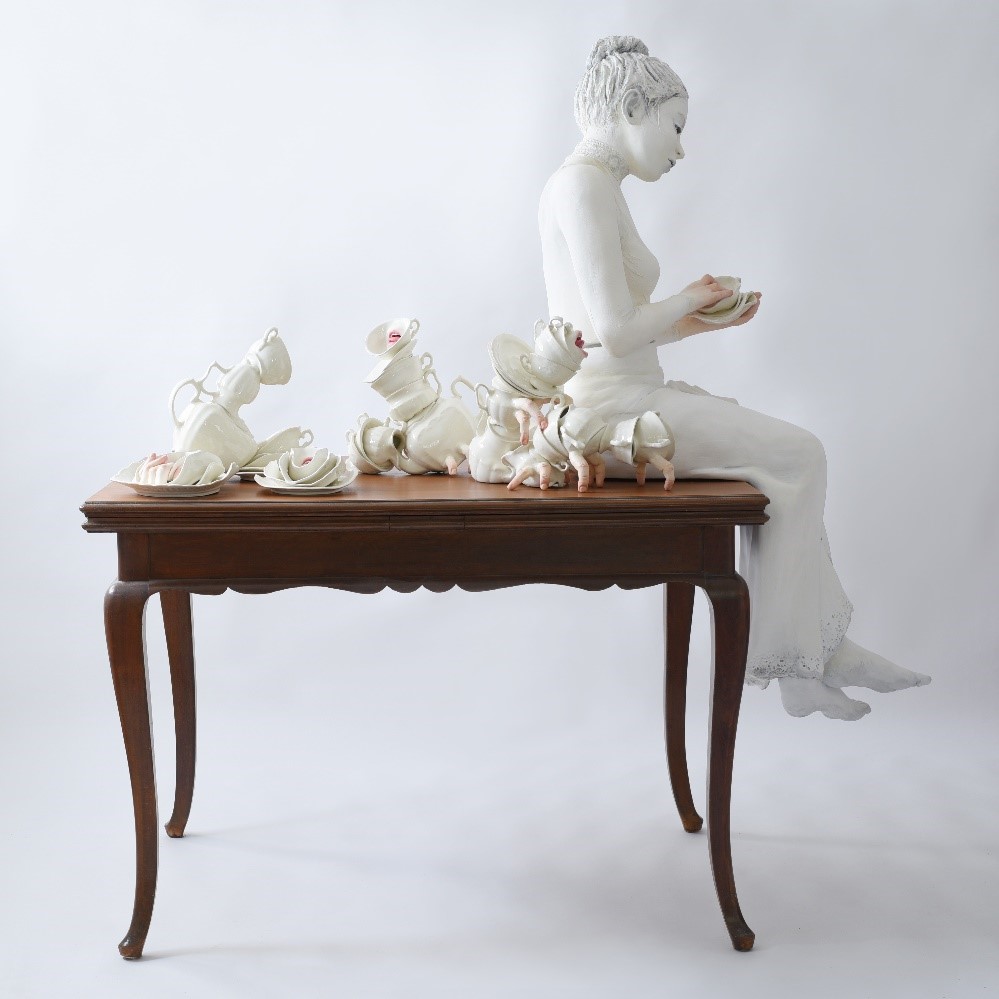
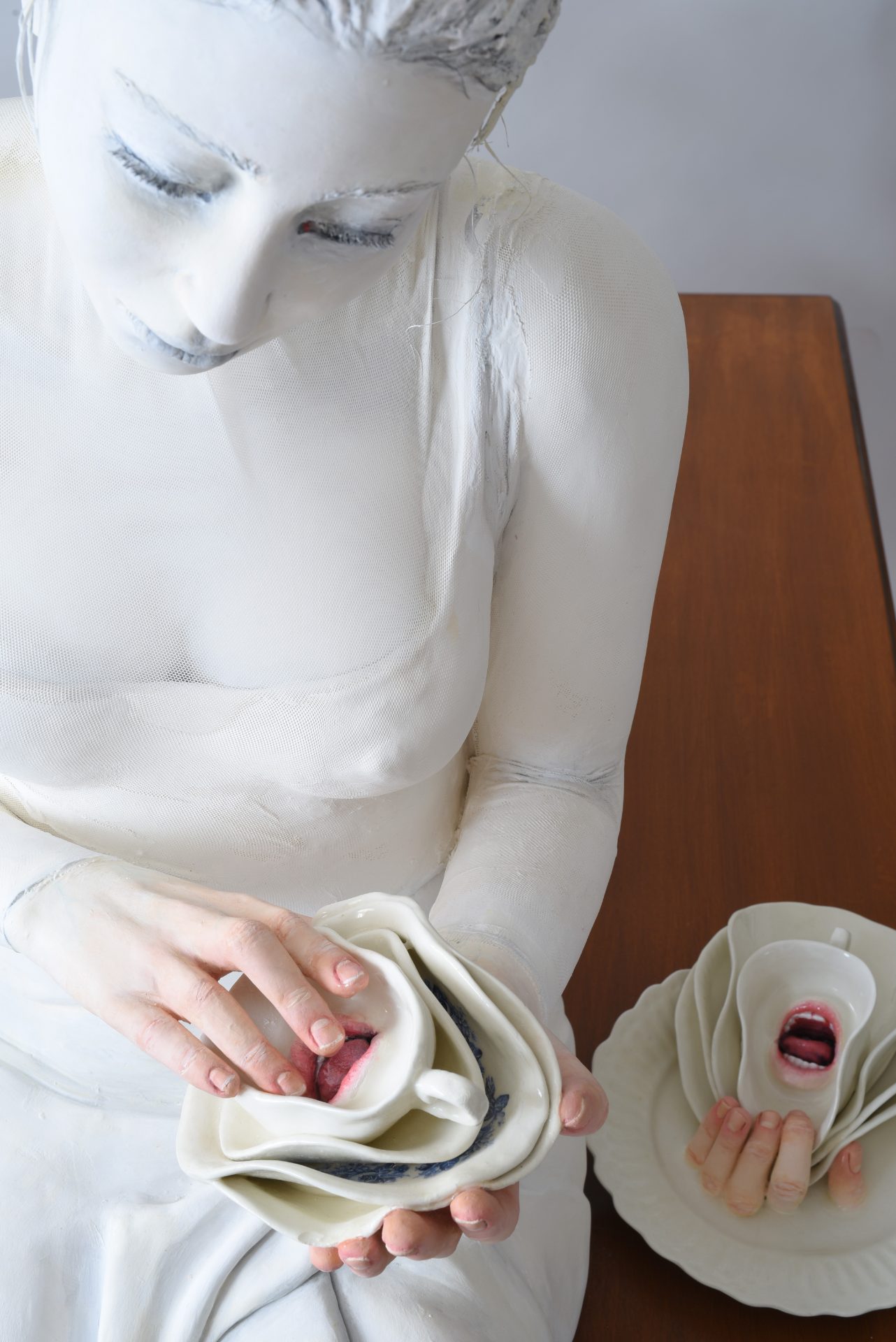
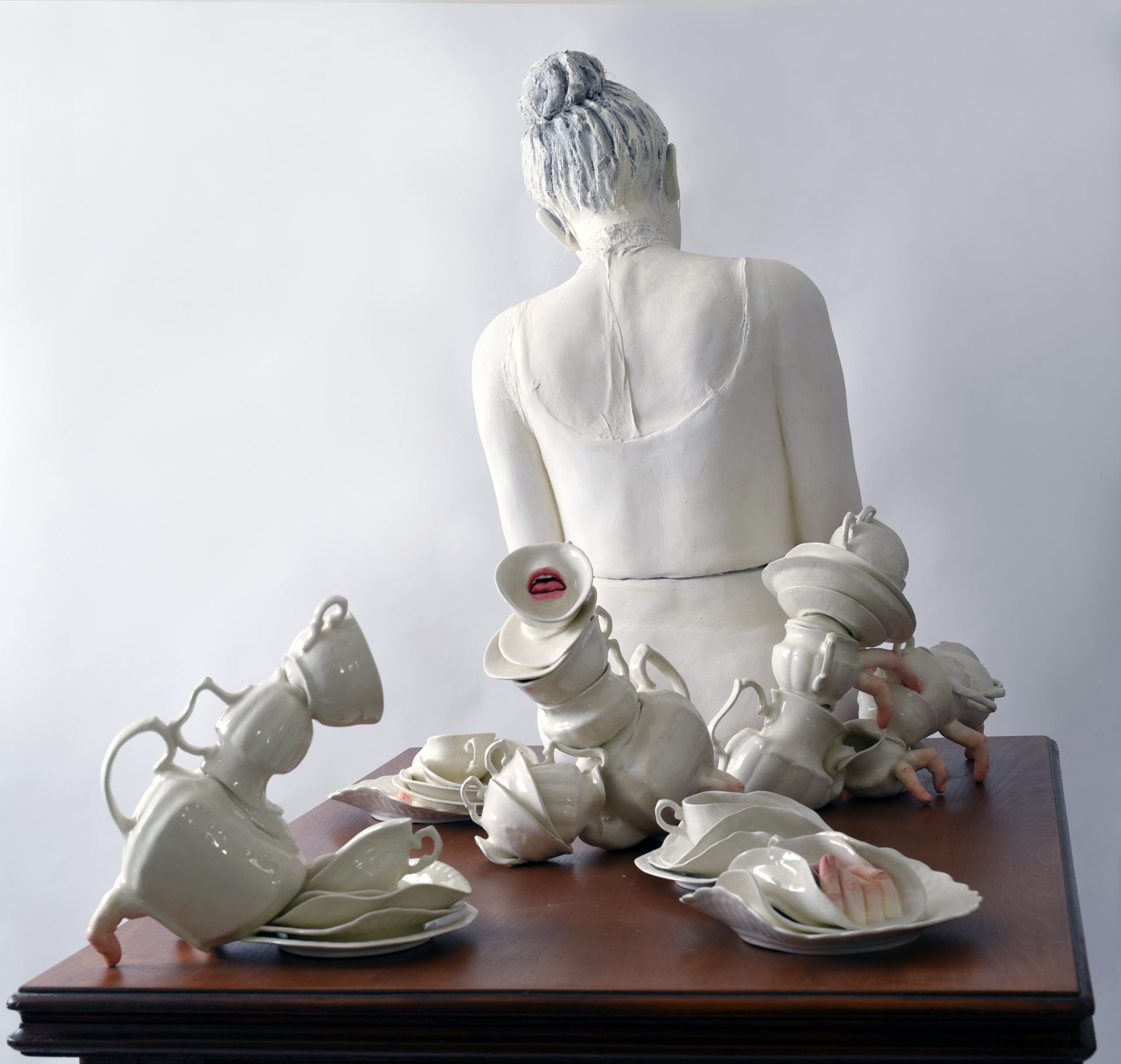
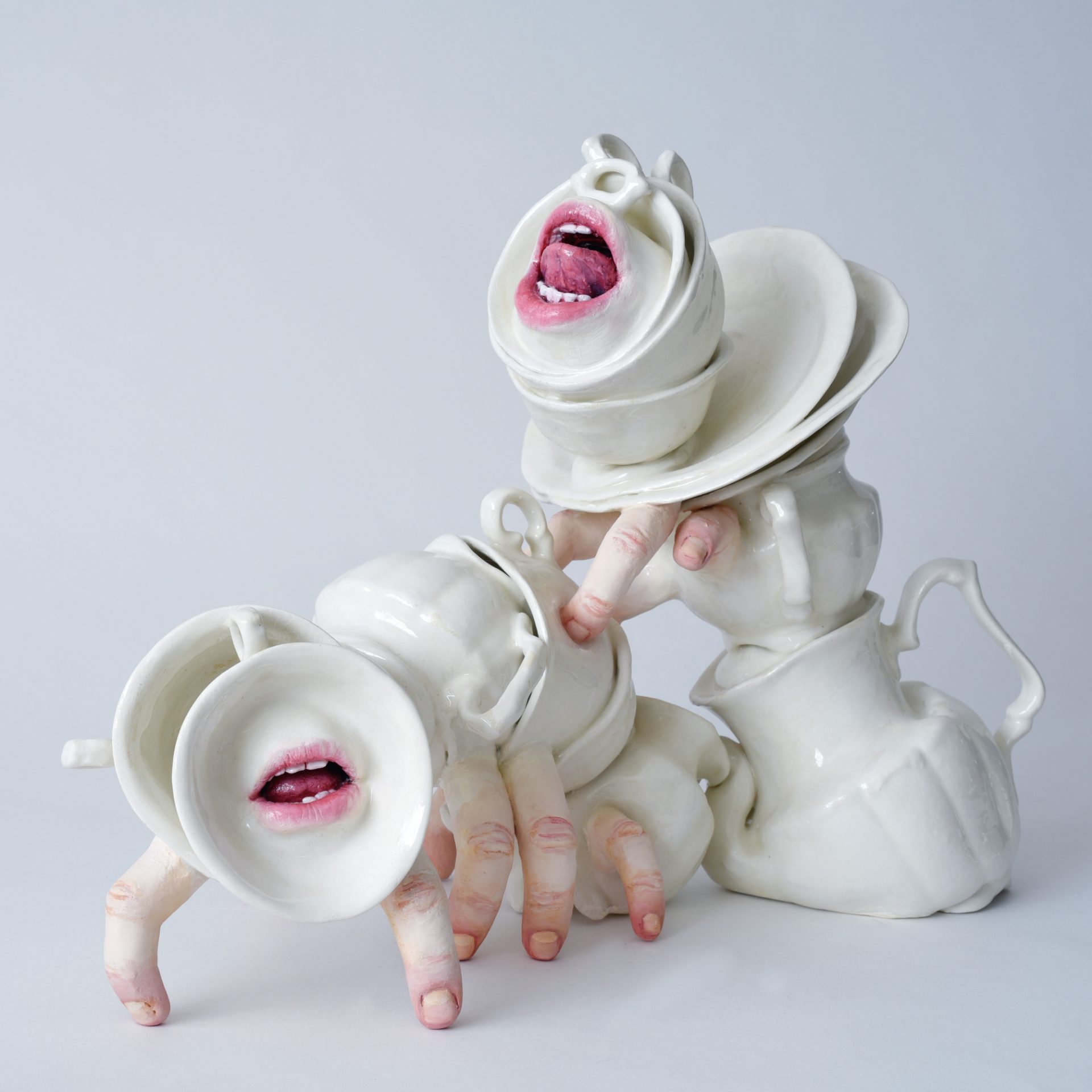
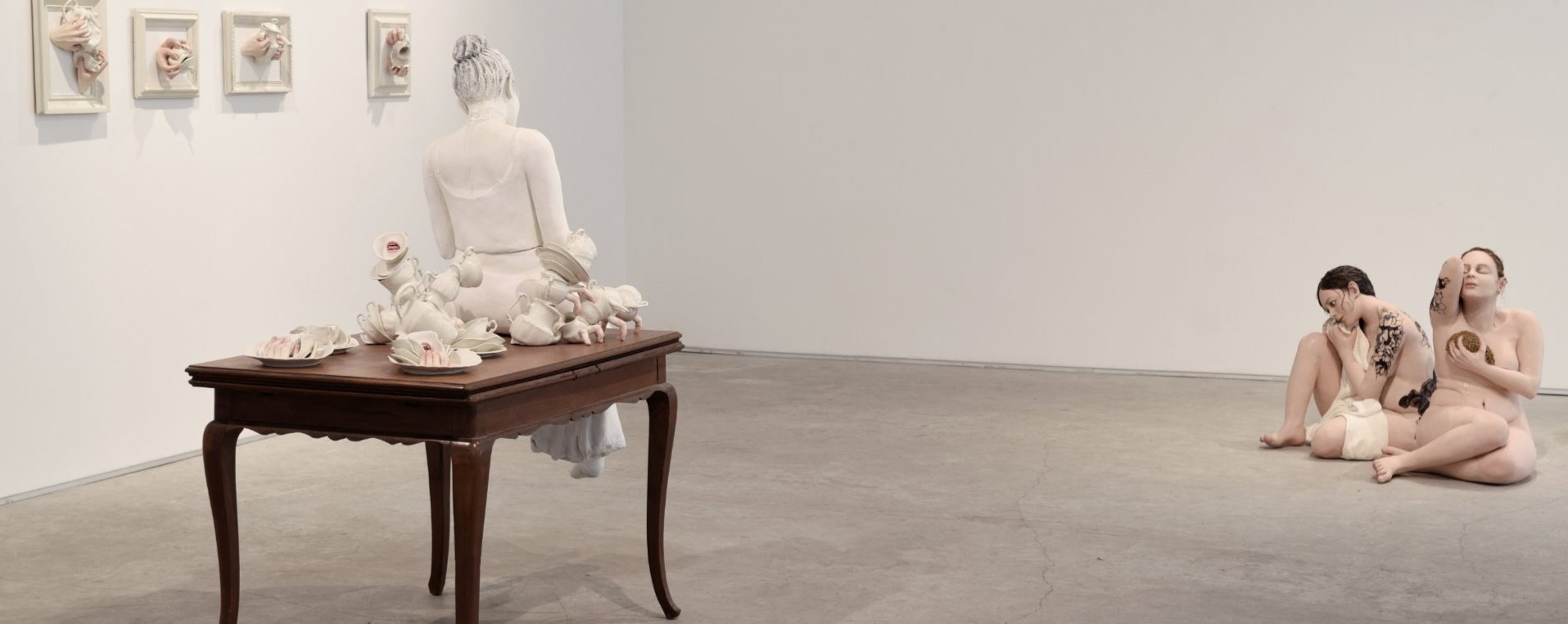
The table installation in the eating room is a metaphor for suppressing impulses, sexual repression. A statue of a young woman sits defiantly on the dining table. She is sitting upright, demure and collected, and at the same time she gives pleasure to a plate. All her repressed sexuality erupts, but she is not aware of it being thrown onto the tea set behind her. The tea set pieces, stacked one on top of the other, create creatures not necessarily alive, taking part in an intimate, indecent activity among themselves.